
Kibble: dry food
The ingredients usually include meat, poultry or fish products and by-products, grains, and added vitamins and minerals. Because of how it is made, kibble needs to contain a certain amount of starch to hold its shape.
Kibble for dogs and cats contains 6% - 10% moisture and 90% or more dry matter.
Most kibbles meet the energy needs of most pets.
However, when it comes to protein, the particular way it is processed and packaged limits the protein content of dry food. Compared with kibble, wet food contains more protein.
Kibble usually contains 8% - 22% fat and 18% - 32% protein. Cat food has slightly more protein because cats are obligate carnivores.
During processing, drying the ingredients too much, or in the wrong way, can reduce how well nutrients are absorbed. This is why poor-quality kibble is less digestible and its nutrients are less well absorbed.
By contrast, in high-quality kibble the meat and fish ingredients are processed properly so that they are highly digestible and the nutrients are well absorbed.
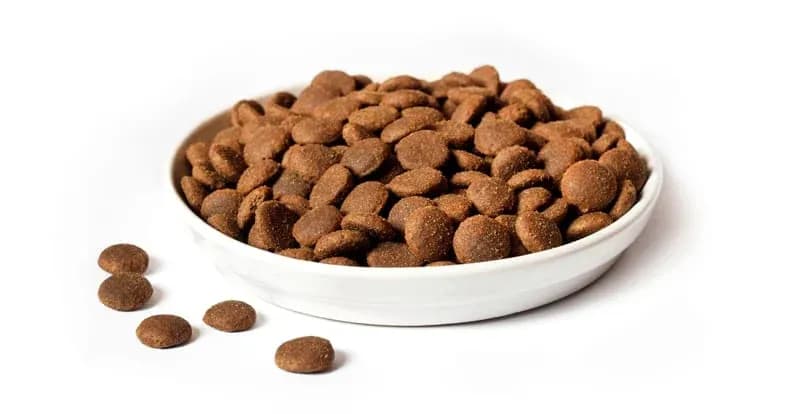
Benefits of kibble
🟢 Long shelf life and convenient: Dry kibble keeps for a long time thanks to its low moisture. You can buy in bulk and store it without worrying about it spoiling quickly (as long as the packaging is intact and the kibble is kept somewhere dry, away from direct light).
🟢 Cost: Overall, kibble is usually cheaper than wet food.
Drawbacks of kibble
🔴 Low water content: This type of food contains little water, which can be a concern, especially for cats, who often do not drink enough water on their own.
🔴 Filler ingredients: Some brands use fillers, such as grains, starch and flavourings, that add no nutritional value.
🔴 Palatability: Many kibbles are low in fat and contain little meat or fish, so they may not appeal to many pets.
However, in recent years there have been kibbles made from premium ingredients, with a medium to high fat content; these are richer in nutrients and have a more appealing taste for pets.
Semi-moist food
Semi-moist food can be thought of as "soft kibble": it contains more moisture than dry kibble. It has a softer texture than dry kibble, which suits older dogs and cats, and those with weak teeth or no teeth.
Dry kibble compared with semi-moist food
Moisture — Dry kibble: low, 6 - 10% · Semi-moist food: higher than dry kibble
Energy* — Dry kibble: 3000 - 4500 kcal/kg · Semi-moist food: 1400 - 1800 kcal/kg
Fat* — Dry kibble: 8 - 22% · Semi-moist food: 8 - 14%
Protein* — Dry kibble: 18 - 32% · Semi-moist food: 20 - 28%
Starch* — Dry kibble: needs a certain amount of starch to hold its shape · Semi-moist food: contains less starch than dry kibble
Storage — Dry kibble: long, thanks to low moisture (intact packaging, dry place, away from direct light) · Semi-moist food: moderate, under reasonable storage conditions
Cost — Dry kibble: cheaper than wet food
Points to note — Dry kibble: low in water (worth bearing in mind for cats, with a risk of kidney disease if they drink little water); some brands use a lot of filler ingredients · Semi-moist food: needs more careful storage once the pack is opened
Suitable for — Dry kibble: as a base diet · Semi-moist food: softer than dry kibble, for older dogs and cats, and those with weak teeth or no teeth
* Percentages on a dry matter basis, with the water removed.
Pâté: wet food
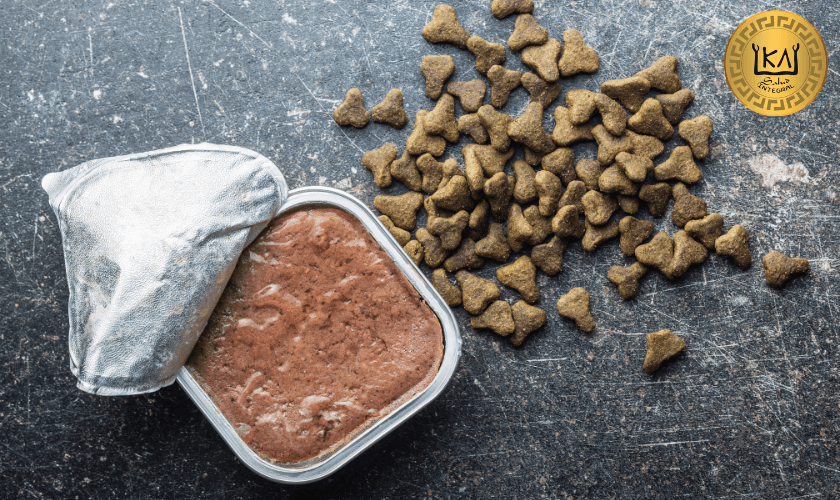
Pâté provides complete nutrition and contains a mixture of ingredients such as meat or fish, meat/fish by-products, grains, plant protein, vitamins and minerals. Some contain only one or two protein sources (meat or fish) together with enough vitamins and minerals to make a nutritionally complete meal.
Lickable treats and broth-style wet treats are also a kind of wet food. They contain similar ingredients and meat/fish by-products, but have no added vitamins and minerals. These products should only be given as snacks or for fun, and do not replace your pet's main meals.
In pâté, the fat content ranges from 20% - 32% and protein from 28% - 50%; the proportion of carbohydrate is usually low compared with kibble.
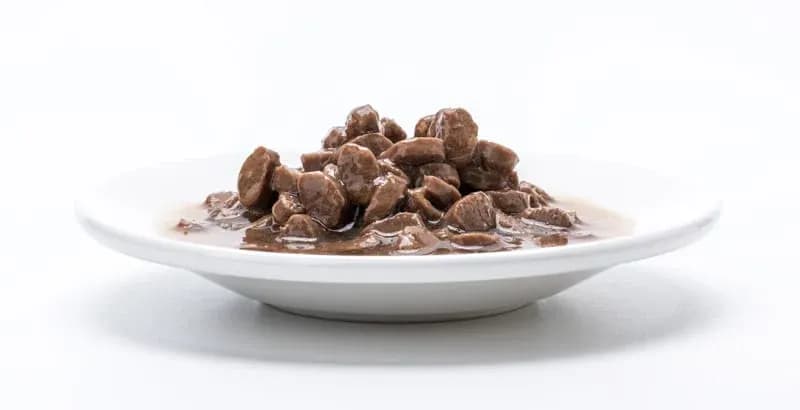
Benefits of pâté
🟢 High water content: Pâté contains a lot of water, which helps keep pets well hydrated, and is especially useful for cats, who often do not drink much water.
🟢 Long shelf life: Canned pâté can be stored for a long time, unlike fresh pâté, which has a short shelf life.
🟢 Palatability: Many pets, including fussy eaters, tend to prefer the taste and texture of pâté.
🟢 Fewer preservatives: Because of the nature of this type of food, wet food usually contains fewer preservatives.
Drawbacks of pâté
🔴 Shelf life once opened: After opening, pâté needs to be eaten quickly, and what is left must be kept in the fridge. After 3–4 hours out of the fridge, leftover pâté must be thrown away.
🔴 Cost: Overall, pâté is more expensive than kibble.
🔴 Palatability: Because pâté is so tasty, it can be a disadvantage for pets that eat a lot, and may easily lead to a risk of obesity.
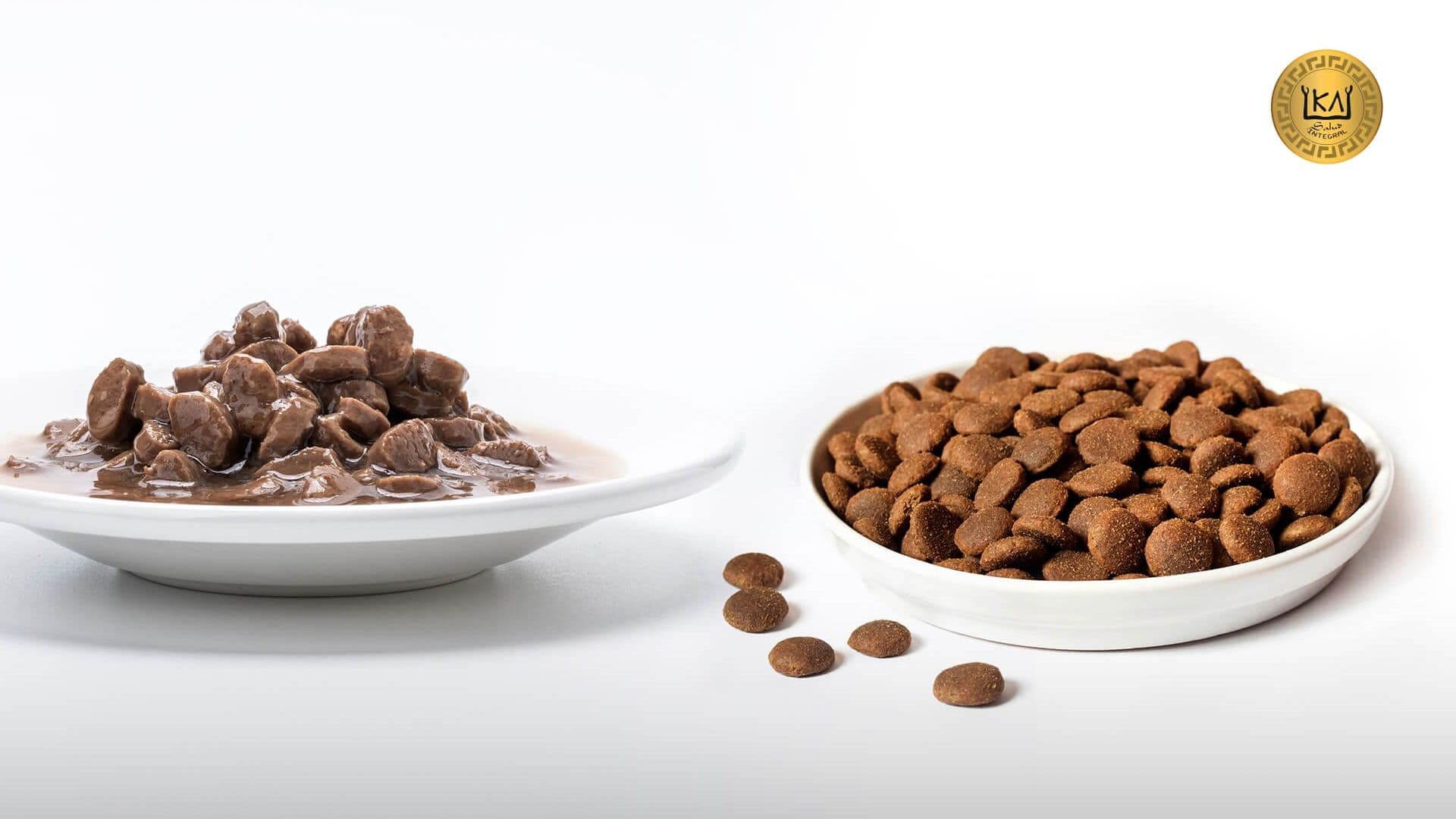
Dry kibble compared with pâté
Moisture — Dry kibble: low, 6% - 10% · Pâté: high, helps top up water intake
Energy* (on a dry matter basis) — Dry kibble: 3000 - 4500 kcal/kg · Pâté: 1600 - 2300 kcal/kg
Fat* — Dry kibble: 8 - 22% · Pâté: 20 - 32%
Protein* — Dry kibble: 18 - 32% · Pâté: 28 - 50%
Starch* — Dry kibble: needs a certain amount of starch to hold its shape · Pâté: contains less starch than dry kibble
Storage — Dry kibble: long, thanks to low moisture (intact packaging, dry place, away from direct light) · Pâté: canned pâté has a long shelf life; fresh pâté has a short shelf life; once the can is opened, it must be used straight away and kept in the fridge
Cost — Dry kibble: cheaper than pâté · Pâté: usually more expensive than kibble
Points to note — Dry kibble: low in water (worth bearing in mind for cats, with a risk of kidney disease if they drink little water); some brands use a lot of filler ingredients · Pâté: can easily lead to obesity if portions are not controlled, and spoils quickly if not stored well
Suitable for — Dry kibble: as a base diet · Pâté: giving water to cats that are reluctant to drink
* Percentages on a dry matter basis, with the water removed.
So which food should you choose?
When choosing kibble or wet food, consider one that is:
• Right for your pet's age (puppy or kitten, adult, senior)
• Right for your pet's health (neutered, pregnant or nursing; or with liver, kidney, digestive or dental problems; allergies; underweight or overweight, and so on)
• Right for your pet's activity level (low or high)
• Within your budget
Combining both: Many owners choose to combine the two, using kibble as the base and wet food as an "extra" meal. For cats, at least half of the daily ration should be wet food.
Quality matters more than quantity: Give priority to a complete formula with natural ingredients and no additives, and with a high-quality animal protein source as the first ingredient.
In upcoming articles, we will explain how to read and assess the ingredients of kibble and wet food products.
Conclusion on kibble and wet food
The choice between kibble and wet food depends on your pet's specific needs, their preferences and your budget. Both options have advantages and drawbacks, so it is essential to learn about them carefully and to consult a veterinarian or a nutrition specialist to make the best decision. Remember: your pet's health and happiness depend greatly on a suitable, balanced diet.